


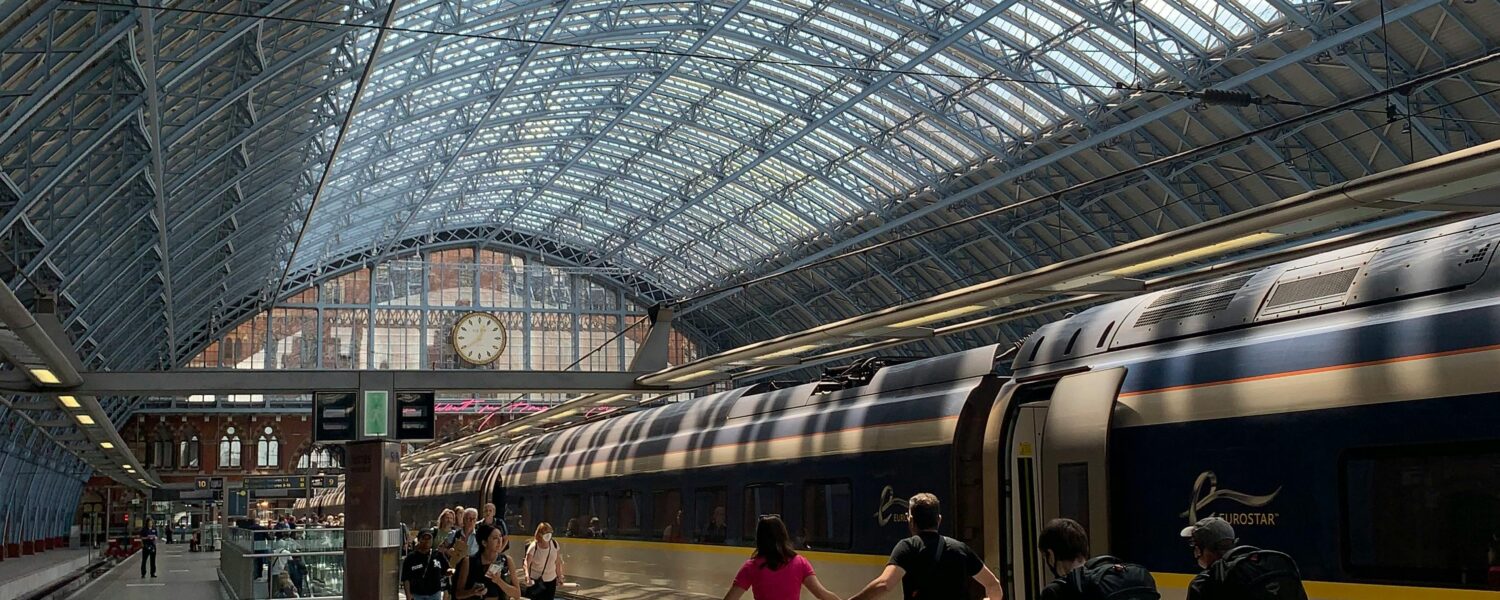
Why Europe Is Choosing Trains Over Planes for the Next Five Years
This shift has gone from being a “nice idea” to becoming the standard way of doing things.
If you travel for work in Europe, you’ve likely noticed the change. Rail is no longer just a backup when flights are inconvenient. On more and more routes, it’s simply the practical choice. If you’re reviewing how your business books rail across Europe, FGT can support with Rail & Eurostar as part of a managed travel programme.
It’s not just the infrastructure that has changed. People’s intentions have too. More travellers expect to use trains more often in the coming years, which matters for any organisation regularly moving people between European cities. This isn’t a lifestyle trend. It’s a practical shift driven by time, policy, cost, and the realities of business travel.
From a corporate travel programme perspective, the question is no longer “Should we allow rail?” It’s “Where does rail become the first choice, and how do we make it easy, compliant, and predictable?”
Contents
- Rail has moved from option to default
- Door-to-door time is beating flights more often than people realise
- Productivity changes the real cost of a trip
- Sustainability is driving policy decisions
- Carbon reporting is pushing rail-first rules
- Predictable costs matter more than ticket price
- Reliability, resilience, and duty of care
- Comfort improves performance and compliance
- Technology is making rail booking easier
- Better data makes improvement possible
- What this means for corporate travel programmes
- How a corporate travel partner can help
- What the next five years could look like
- Conclusion
Rail has moved from option to default
Rail is no longer “nice to have” in a European travel programme. On the right routes, it’s the sensible default because it reduces friction, keeps travellers closer to city centres, and makes planning more predictable.
Door-to-door time is beating flights more often than people realise
Flights can look faster on paper, but business travel is about door to door, not airport to airport. That’s where rail is gaining a real advantage.
Short-haul flights come with extra hassle: getting to airports that are often far from the city centre, arriving early, security, boarding queues, delays, and transfers at the other end. Even a 60-minute delay can wreck a day of meetings.
Rail removes much of that. Stations are usually central, boarding is simpler, and timings can be more reliable. When flying still makes sense, FGT can support with managed Flights so travellers get the best option for the trip, not just the familiar one.
Productivity changes the real cost of a trip
This is the bit that gets underestimated. On a train, you can often start working as soon as you sit down. Calls are easier, laptops are practical, and you’re not losing time to security steps and repeated waiting.
For travel managers, that affects the true cost of a trip. Two travellers might spend the same, but one arrives calm and ready, while the other is late and stressed. Over hundreds of trips, that’s not a perk. It’s performance.
Sustainability is driving policy decisions
Most organisations now sit under some form of sustainability commitment, whether that’s ESG reporting, client expectations, a net zero pathway, or a mix of all three. Travel is one of the areas where progress is visible and measurable, so it’s getting more attention from leadership teams.
Rail is one of the simplest switches to make on many routes because it can cut emissions without stopping travel. The goal isn’t to eliminate trips. It’s to travel smarter.
Carbon reporting is pushing rail-first rules
More travel policies now include rules like “rail first under a set journey time” or “rail preferred where there’s a direct service.” The goal isn’t to make travel harder. It’s to create consistency and make reporting simpler.
When rail is booked through managed channels, it becomes easier to track, report, and improve. That matters if you need reliable figures for internal stakeholders, clients, or audits. This is exactly where structured Reporting becomes valuable.
Predictable costs matter more than ticket price
People often ask whether rail is “cheaper” or “more expensive” than flying, but what businesses care about is predictability and total trip cost, not just the first fare shown on screen.
Airfares move fast with demand, capacity, and last-minute bookings. Add fees and extras and the final cost can climb well beyond the initial fare.
Rail is often easier to budget for, especially when travellers book early on key corridors. It’s also simpler to manage because there are fewer add-ons and less fare complexity than short-haul flights. If you’re tightening up planning discipline, FGT’s Cost & Time Saving guidance is a good place to start.
Even if a flight looks cheaper at first, the total trip cost can shift once you add:
- Transfers to and from airports
- Time lost to airport processes
- Higher disruption costs when a flight is cancelled
- Overnight stays caused by inconvenient schedules
Rail doesn’t remove every cost, but it cuts down the number of things that can push a trip over budget.
Reliability, resilience, and duty of care
Corporate travel planning used to focus mostly on convenience and choice. Now resilience matters just as much.
Disruptions aren’t new, but aviation has more pressure points: weather, airspace limits, delays, and capacity issues. When schedules are tight, one problem quickly creates several.
Rail disruptions happen too, but they’re often more localised, and there can be alternative services that make recovery easier. From a duty of care standpoint, having options matters, and being able to respond quickly matters even more. If travellers need support outside normal hours, FGT’s 24 Hour Service is built for exactly that.
Comfort improves performance and compliance
Comfort isn’t a luxury when travel is part of someone’s job. If your team travels often, the experience affects performance. Cramped trips, long queues, and unpredictable waits take a toll.
Trains usually offer more space and a better setup for working. Small things like a proper table, power, and room to move add up. People arrive in better shape, meetings go better, and fatigue is lower.
This also affects compliance. Travellers follow policy more consistently when the preferred option feels clearly better. A “take the train” rule lands best when the train is genuinely the easier choice.
Technology is making rail booking easier
Rail was slower to catch on in corporate travel because booking could be messy: different operators, inconsistent ticketing, and poor integration.
That’s changing. Rail options are easier to find on modern booking platforms, and it’s simpler to apply policies, approvals, and reporting, similar to flights and hotels. If you’re moving towards a more controlled, self-serve model, FGT supports Online booking with Concur as part of managed travel.
Better data makes improvement possible
When rail is booked through managed channels, it becomes measurable:
- Spend by corridor
- Traveller adoption rates
- Policy compliance
- Emissions impact
- Disruption patterns and recovery performance
That turns rail from “a nice option” into a managed part of the programme, which is where the real value shows up. Keeping everything in one place also helps travellers stay organised on the move, which is why tools like Itinerary Management are useful when rail volume rises.
What this means for corporate travel programmes
A rail-first approach isn’t a blanket rule. It works best when it’s focused and practical.
Start with routes where rail is clearly the best choice. City-centre to city-centre routes with frequent service and timings that suit day trips are where you can strengthen policy with minimal pushback.
For other routes, a mix of rail and air makes sense. Some trips still need flights because of distance, timing, or traveller needs. The goal isn’t to remove flights. It’s to choose smarter defaults.
Set clear rules, not vague preferences. “Consider rail” rarely changes behaviour. Clear rules do:
- Rail preferred under a defined journey time
- Rail required where a direct service exists and timings suit business needs
- Exceptions allowed with a simple reason code (client urgency, disability needs, schedule constraints)
Explain the reasons in plain language. People follow policies when the logic is obvious:
- It saves door-to-door time on key routes
- It reduces disruption risk for same-day trips
- It supports reporting requirements without limiting mobility
- It often improves traveller experience
If you want this to stick long-term, it helps to treat rail adoption as part of ongoing programme optimisation, not a one-off announcement. That’s where structured Review cycles are useful.
How a corporate travel partner can help
This change is easier when it’s planned, not improvised. A corporate travel partner can help by:
- Mapping your top European corridors and identifying where rail should be the default
- Building policy triggers that are practical and defensible
- Integrating rail content into your booking channels
- Supporting traveller comms so adoption doesn’t feel forced
- Improving reporting across spend, compliance, and emissions
- Supporting disruption recovery so duty of care stays strong
In other words, rail doesn’t have to be another moving part. It can become a simpler, more controlled part of your travel programme with the right Account Management behind it.
What the next five years could look like
The direction is clear: more investment in rail, more rail-first policies, and more travellers expecting trains to be the default for a large share of European business travel.
The pressure point will be capacity on busy corridors at peak times. That makes planning, early booking, and clear rules even more valuable.
Organisations that adapt now will find it easier to control cost, support sustainability reporting, and improve traveller experience without reducing their ability to do business across Europe.
Conclusion
Europe isn’t choosing trains over planes because it’s trendy. It’s happening because on many routes, rail is simply the best option.
For business travel programmes, this is a chance to reduce hassle, improve predictability, meet reporting needs, and help travellers arrive in better shape. If you want support shaping a practical rail-first approach, contact FGT Corporate.